January 2018 - October 2018
littleBits
Base Inventor Kit
The littleBits Base Inventor Kit is a technology kit and app that encourages kids to change the world by inventing with electronics.

_how it works
The Base Inventor Kit is an electronic technology kit that encourages kids to invent with electronics. Kids will learn about 3 young inventors from around the world and will build projects ranging from an automatic light to a voice activated gripper to a chompy trash can.
The kit also has a companion app that includes step-by-step video instructions that guide them through seven separate invention builds and then lead them to a boss challenge in which they invent something that solves a problem within their community.
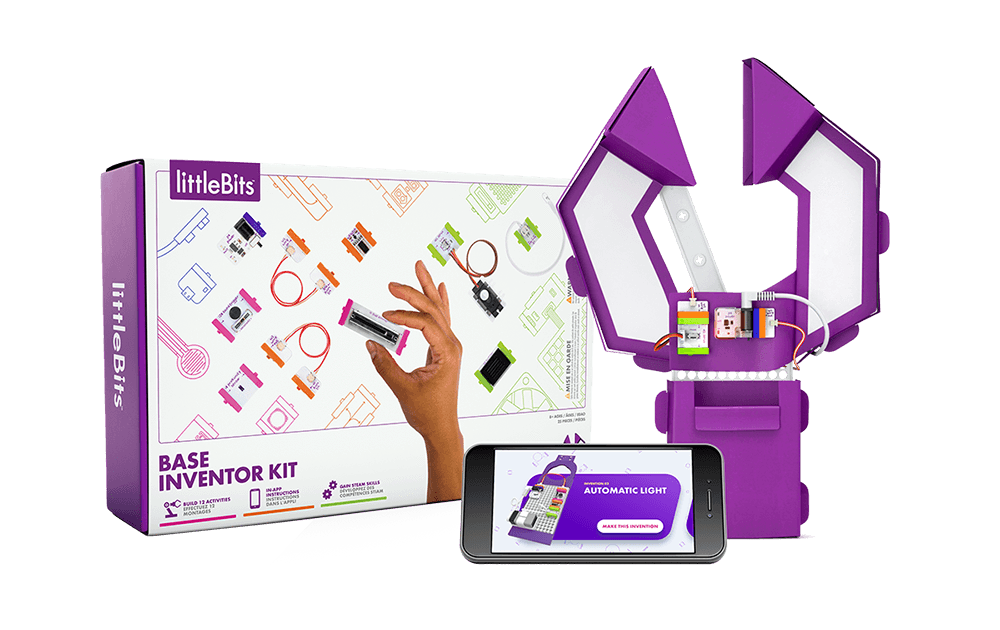
littleBits Base Inventor Kit
_project goals
We set out to create a kit that acted as a general introduction to littleBits and inspired children to solve the problems that they see in the world through invention.
_my role
I worked as a Product Designer on this kit and worked with teams across the company such as ops, legal, marketing, sales, customer support, etc. Throughout the project, I worked on nearly every aspect of the kit. I worked with marketing to come up with the initial kit concept, designed the paper templates included in the kit, built multiple prototypes of the app in HTML, CSS, and Javascript, and user tested the kit with over 80 children across NYC.
_research phase
During the research phase, we interviewed kids to understand what issues really matter to them. We also audited our invention platform to identify themes in the projects that real kids have submitted. We found that kids were particularly interested in three main issues: their community, the environment, and helping people (and animals) in need
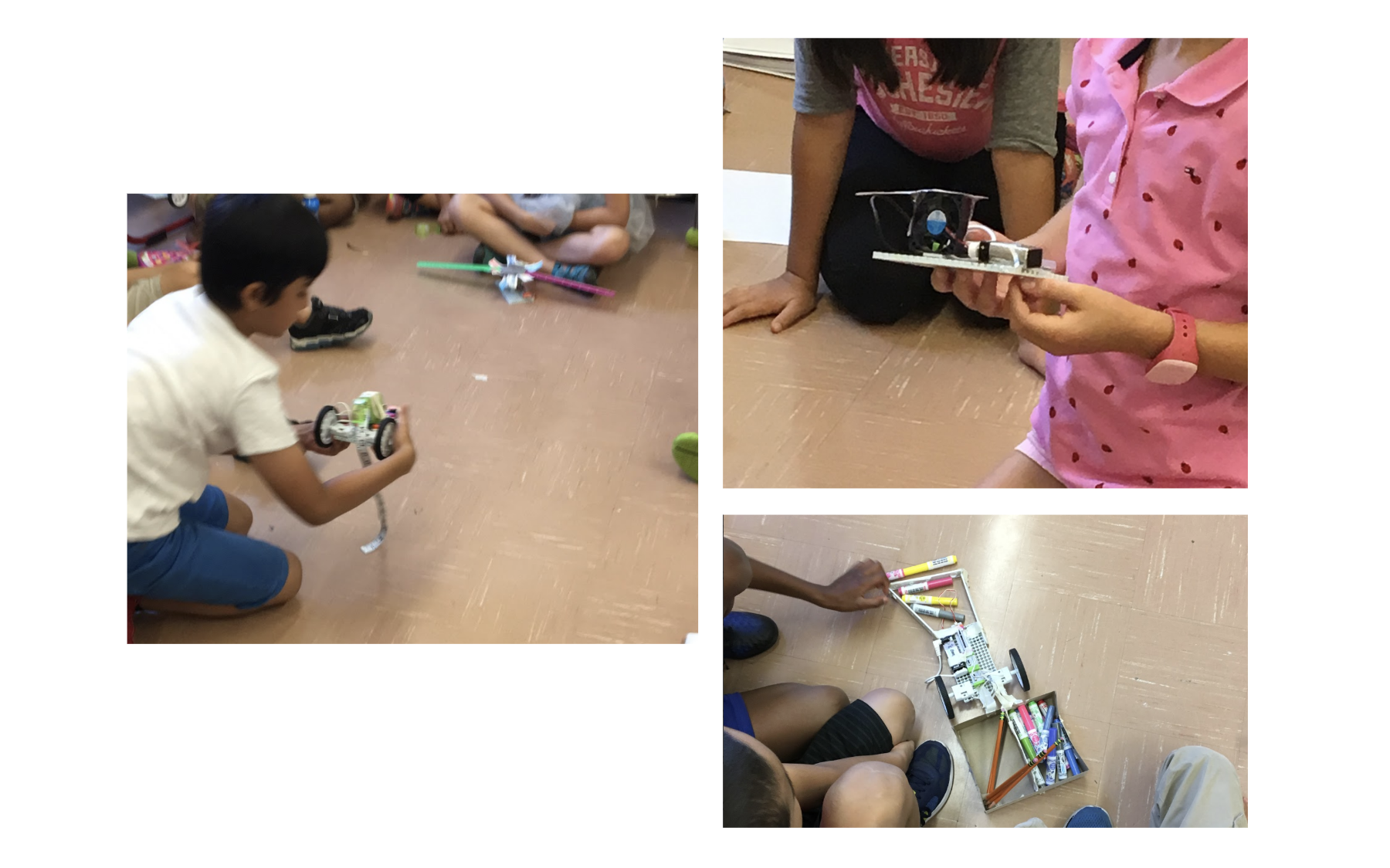
Real kids using littleBits kits in NYC DOE Summer Program
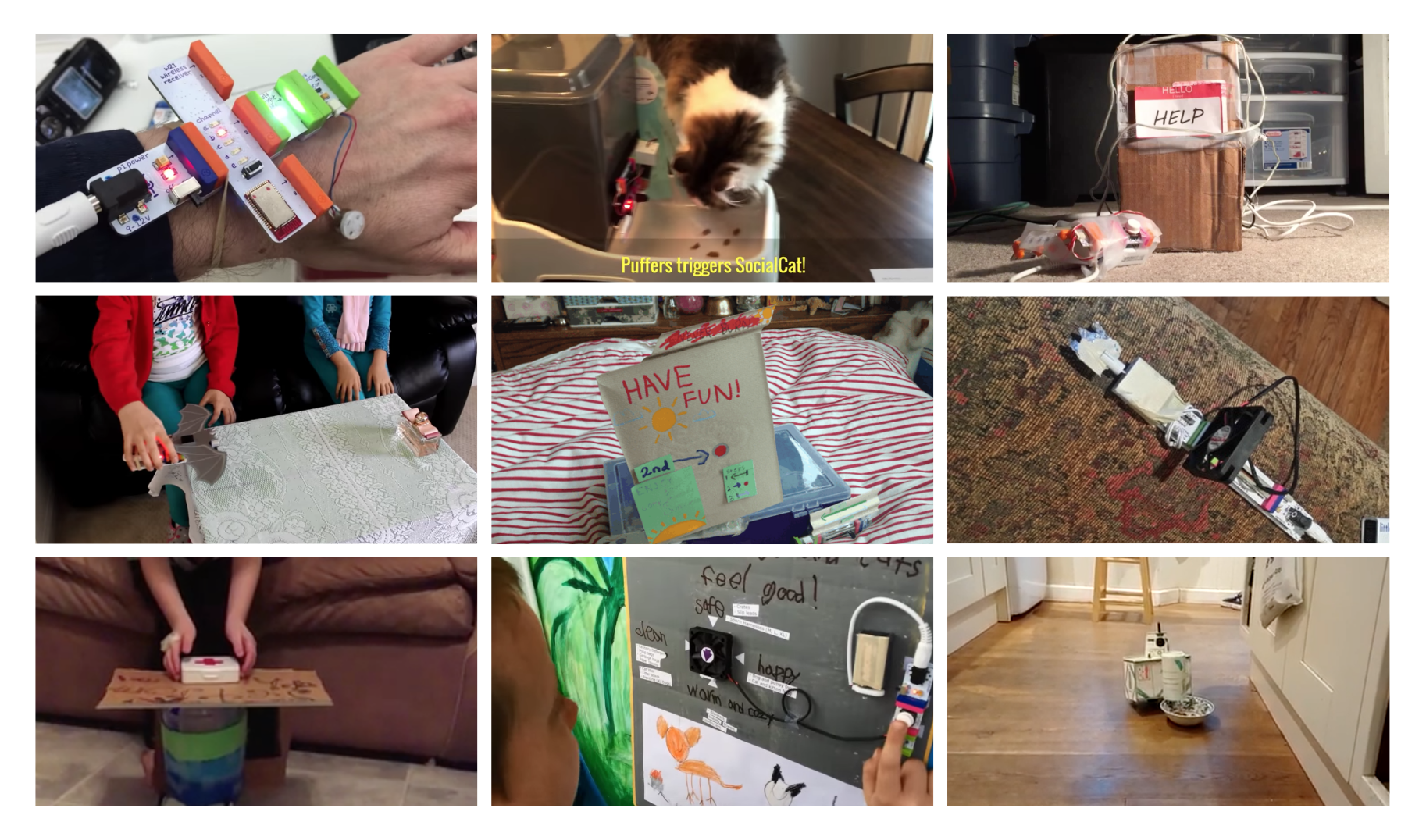
Projects submitted by real kids on the littleBits Invention Platform
We also ran a number of audits before we got started on any design work. We audited data that we collected through NYC’s DOE Summer Program about previous littleBits kits that were used in a classroom setting. We did a competitive audit of similar educational STEM/STEAM kits. Then we ran an internal audit in which we reviewed all previous littleBits kit offerings to get a sense of what themes were most successful.
_concepting phase
In the concepting phase, we then thought through the educational concepts and learning objectives that we wanted to deliver through the kit. These were things like persistence, curiosity, and willingness to take risks.
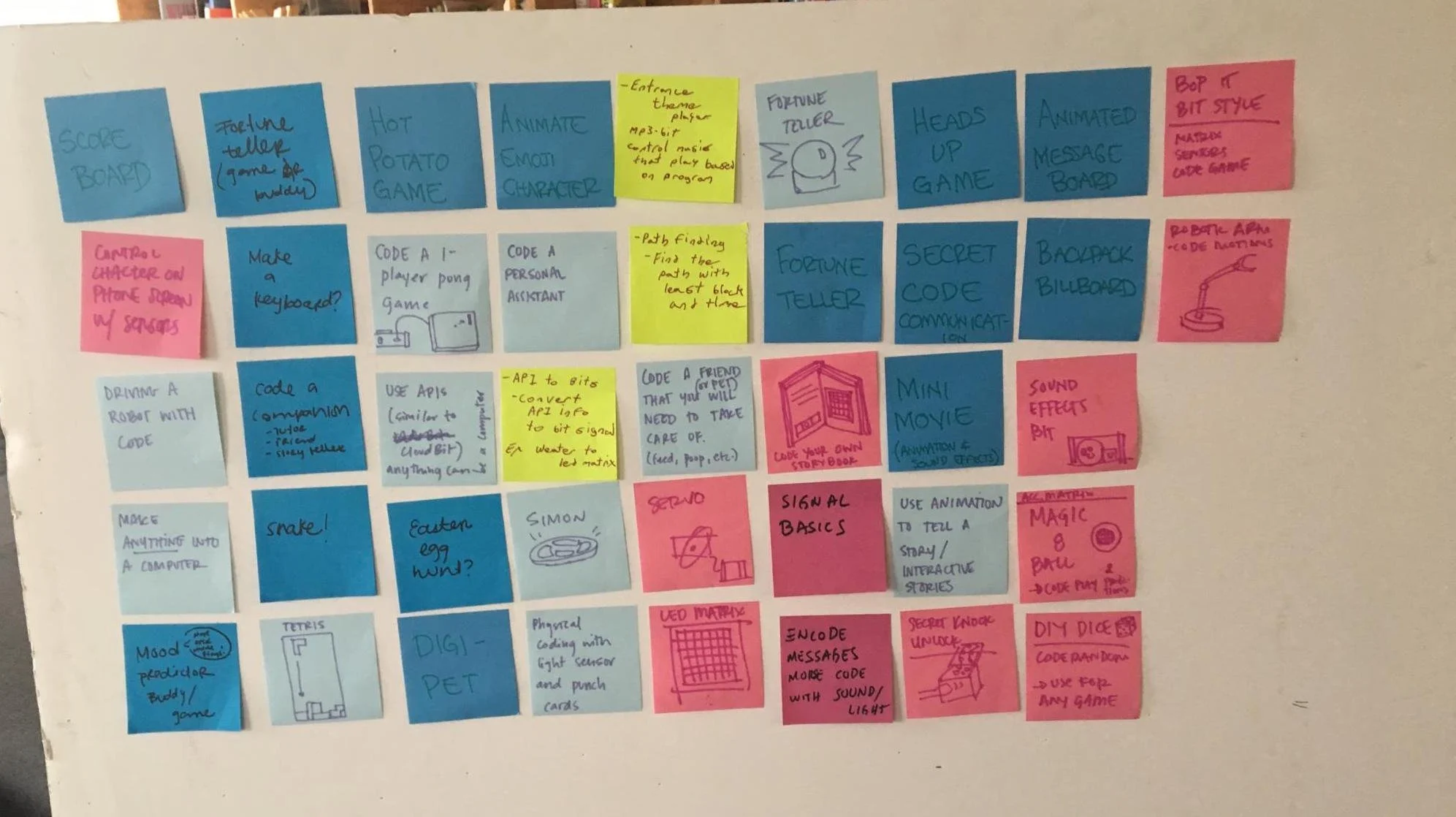
Base Inventor Kit brainstorming session
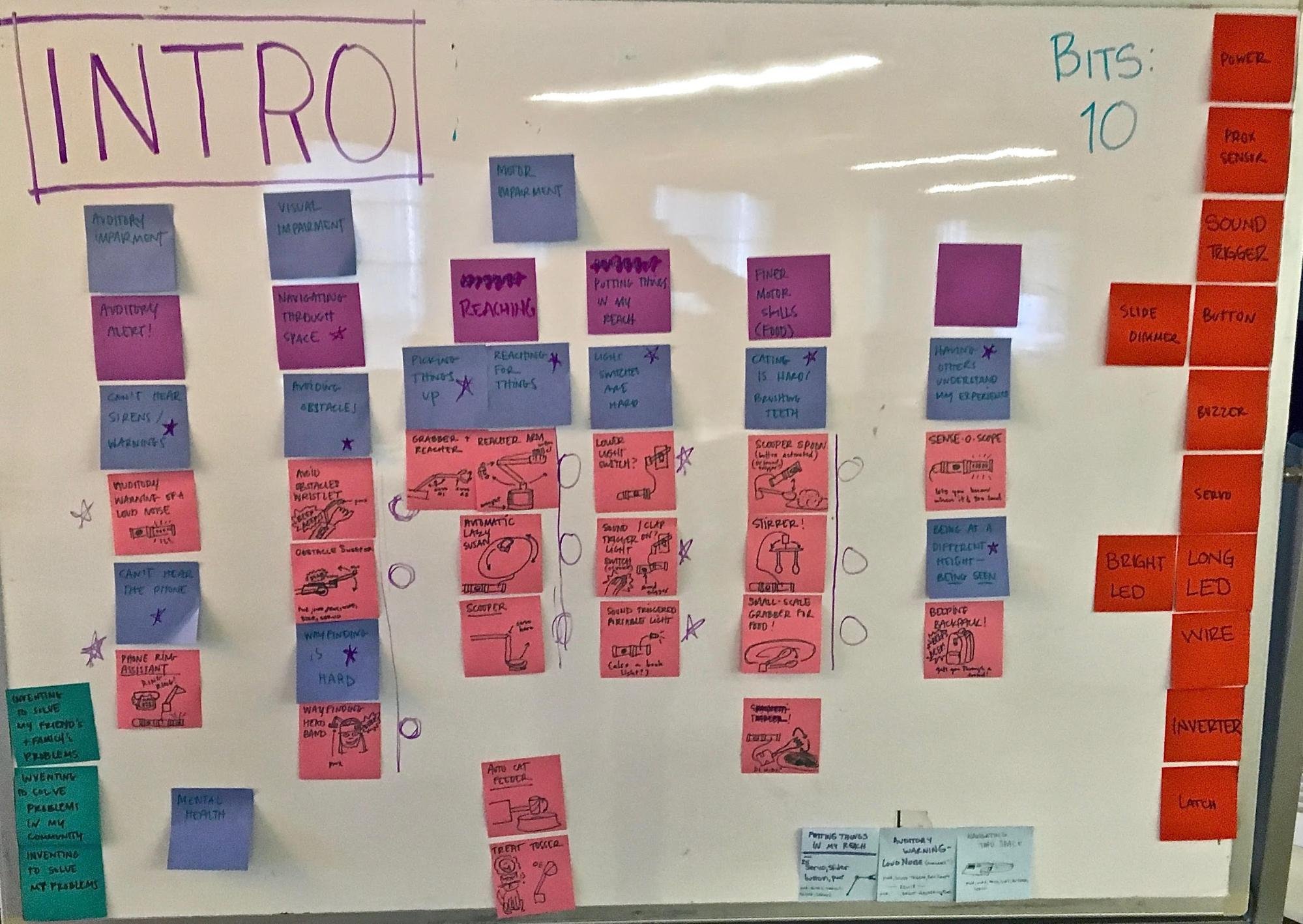
Early iteration of kit experience
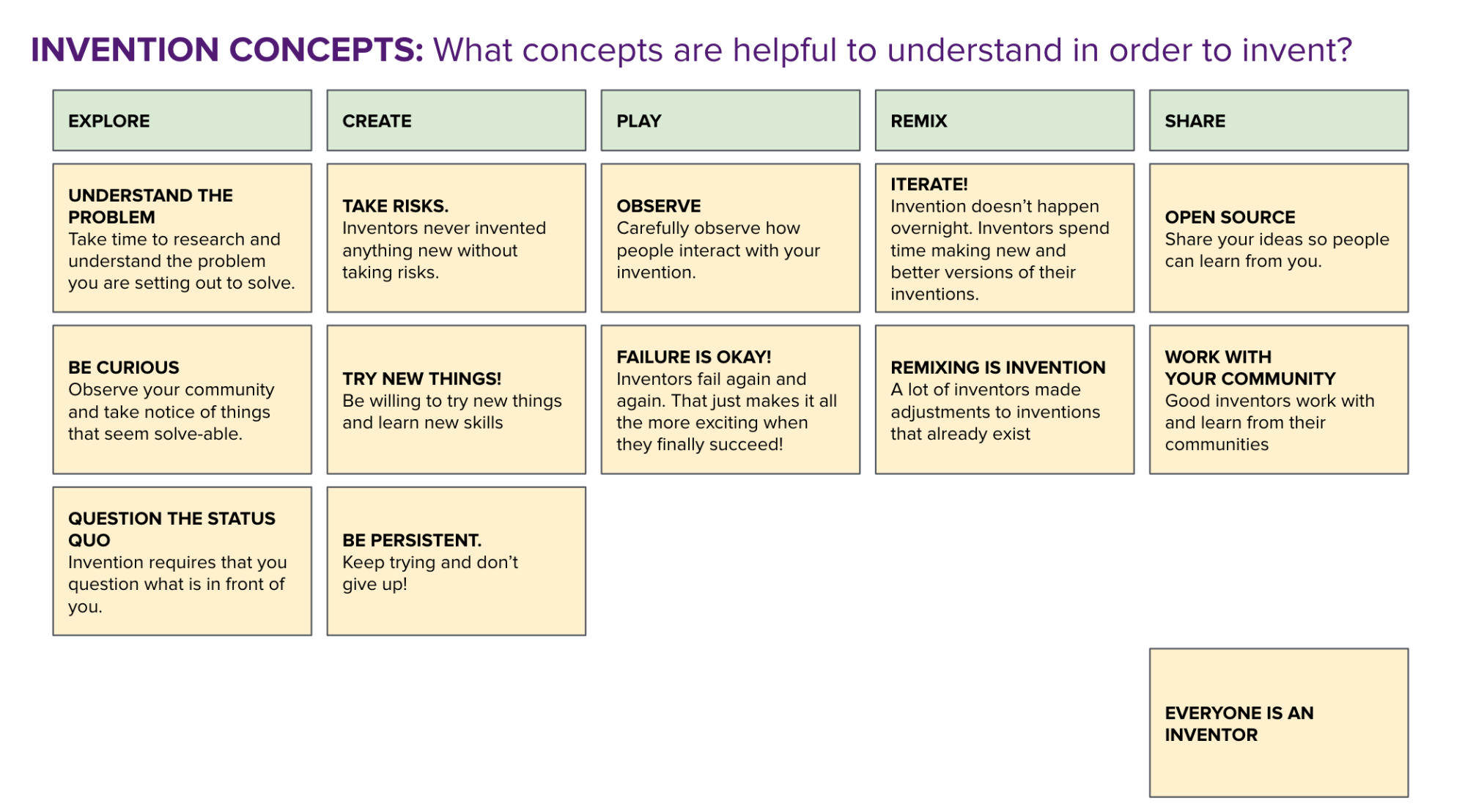
Early iteration of Invention Concepts for Base Inventor Kit
We worked with the marketing and exec teams to define the kit’s narrative and held many brainstorming sessions with teammates across the company to come up with as many interesting project concepts as possible. We then took the different project concept ideas from these brainstorms and mapped out a fun experience that would cover the concepts we had developed earlier in the process.
_prototyping phase
Once we decided on a direction for the kit, I worked with another product designer to design and prototype seven unique project builds to be included in the kit. We started by creating rough prototypes of potential projects to be included in the kit and shared these different directions with kids to see which ideas were most intriguing. We settled on a model boat that picks up litter, a grabber arm, and a voice-activated light.
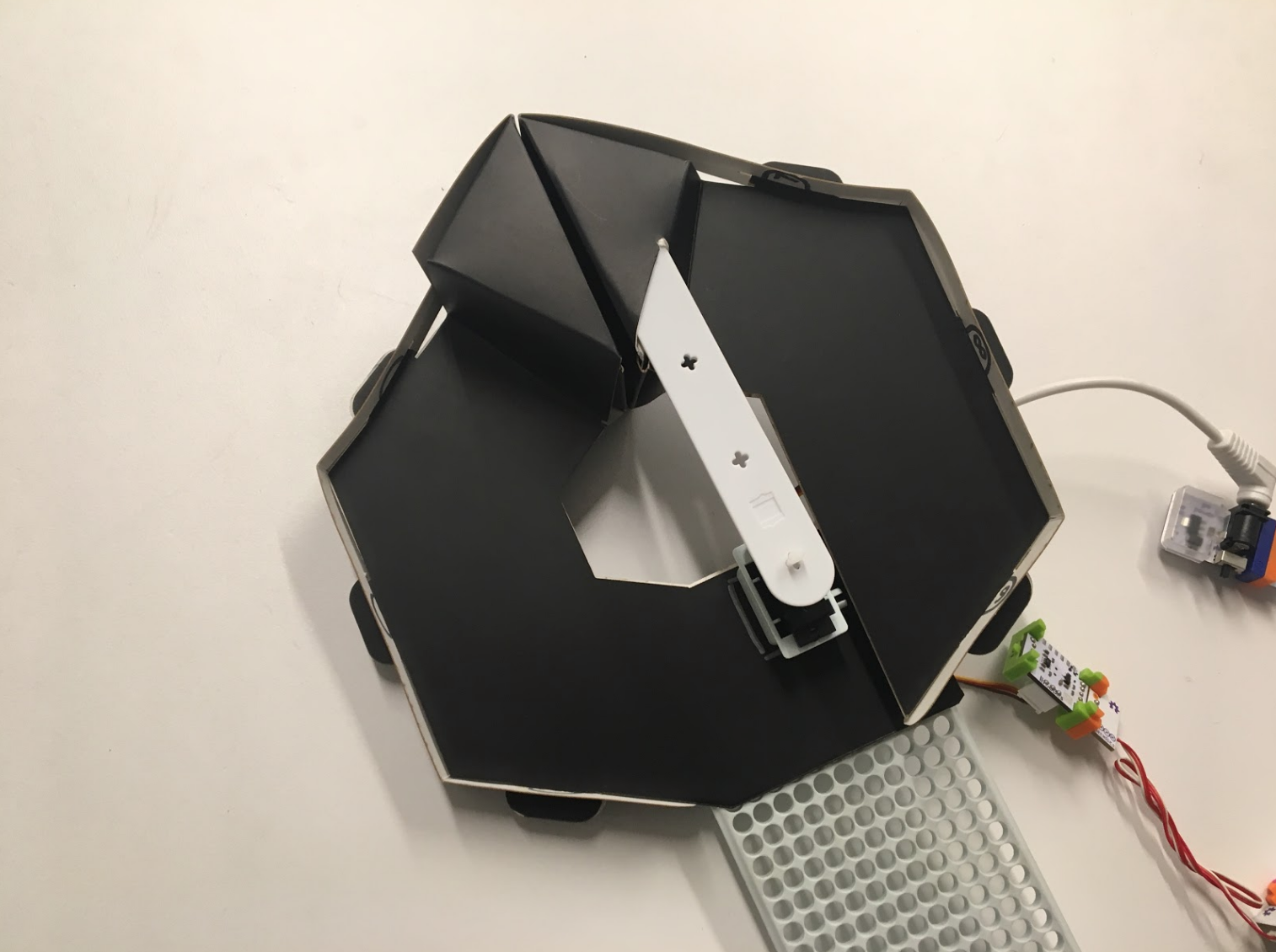
Early gripper invention prototype
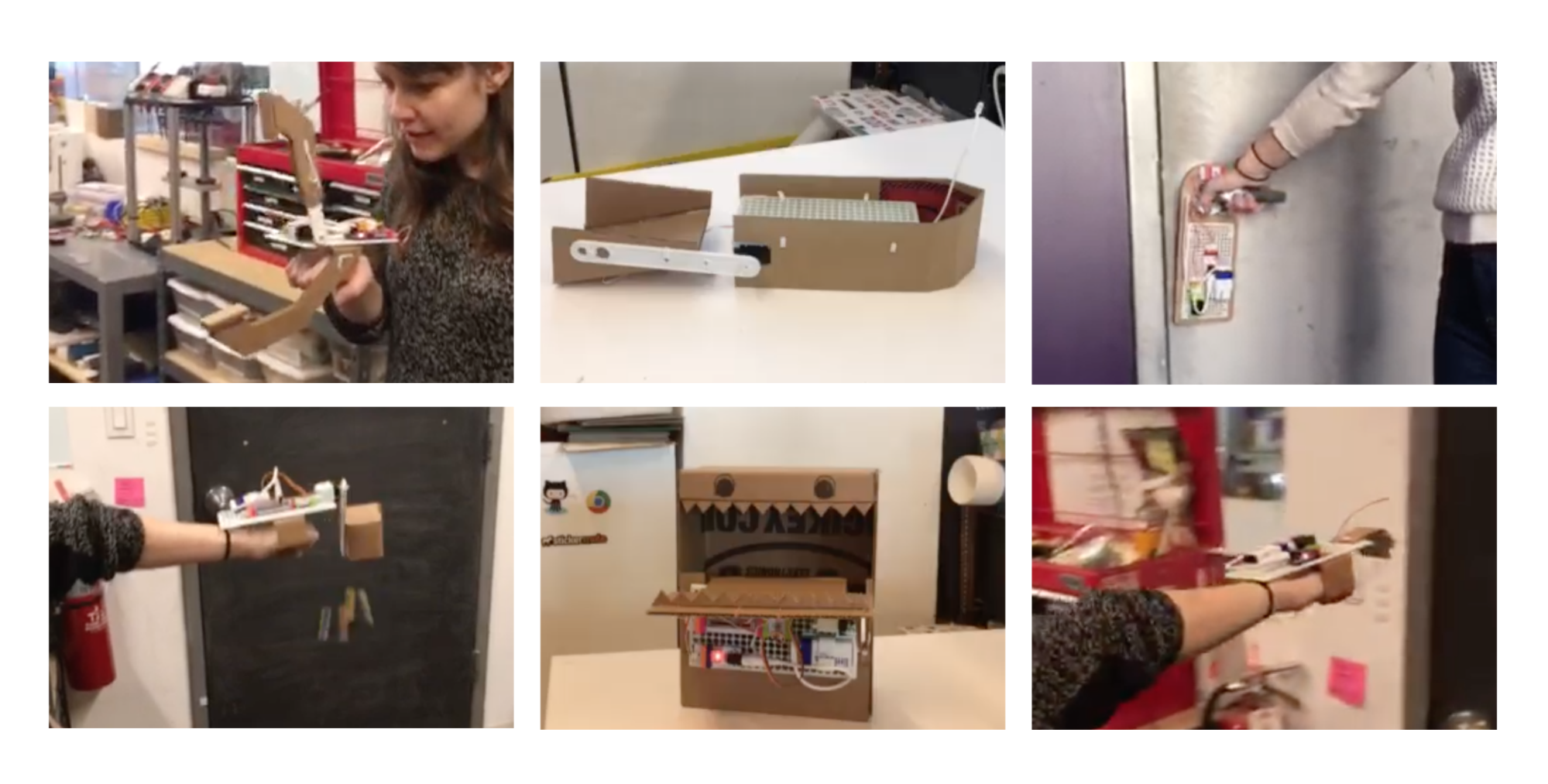
Early cardboard invention prototypes
After identifying project builds that resonated with kids, we then focused on making sure that they were designed in such a way that kids were able to actually build them and play with them! because of budget limitations we needed to design them foldable paper templates made of a durable, plastic-coated cardstock. The templates fit together with easy-to-use tabs and slots.
We then created polished, recognizable versions for each project. We designed foldable paper templates made of a durable, plastic-coated cardstock. The templates fit together with easy-to-use tabs and slots. The templates were manufactured in China and we worked with the operations team to QA each and every template to ensure that each went together easily!